
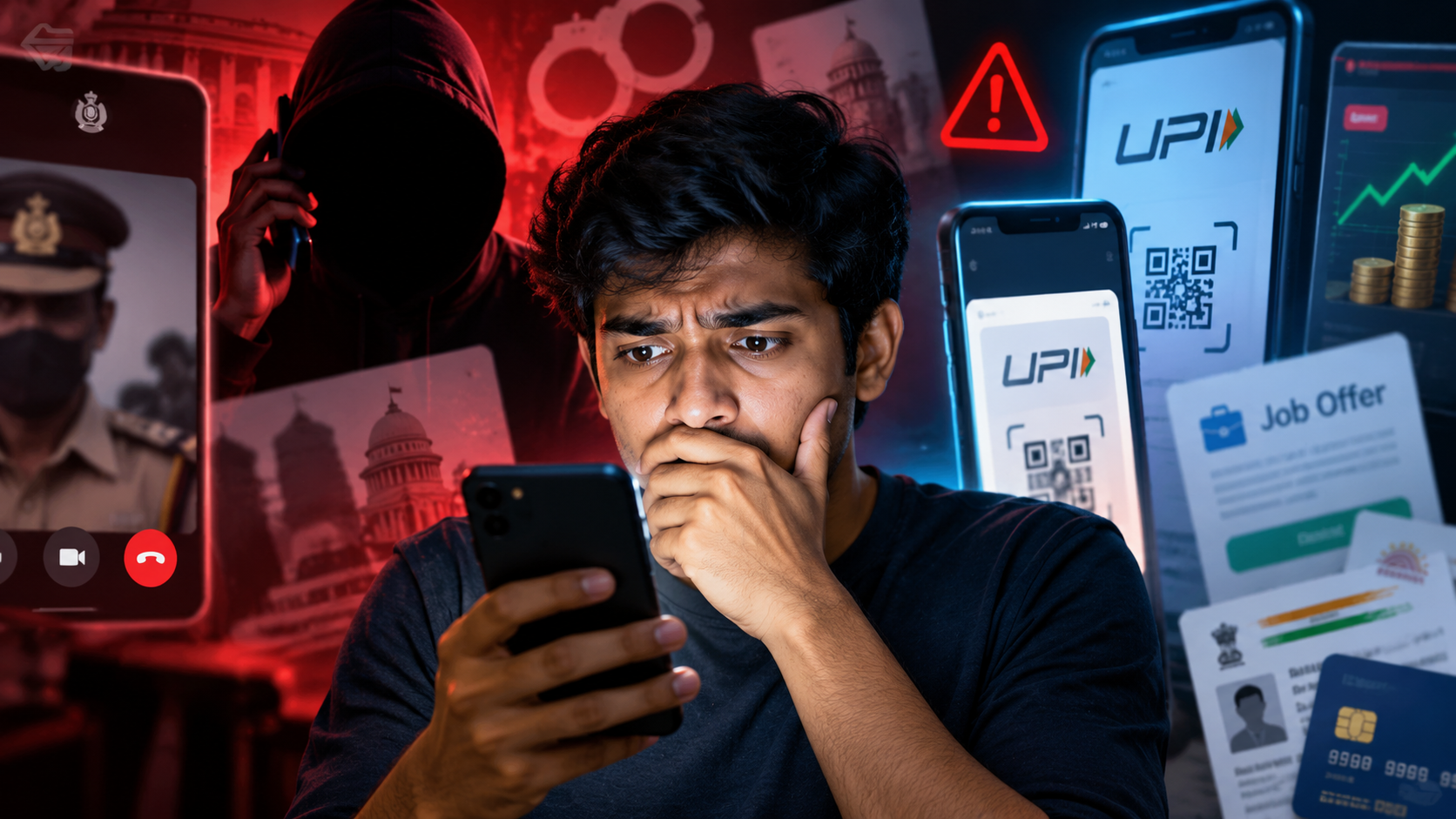
Cyber Crime and Online Fraud in India: Recent Scams, Digital Arrests and How You Can Protect Yourself
The rapid growth of digital banking, UPI payments, online investments, social media and mobile applications has made everyday life easier. At the same time, it has created new opportunities for cyber criminals to target individuals, businesses and families.
What is a "Digital Arrest" Scam?
One of the most serious recent forms of cyber fraud is the so-called "Digital Arrest" scam, where fraudsters impersonate police officers, CBI officials, RBI officials, Enforcement Directorate officials or other government authorities and threaten victims with arrest or criminal proceedings.
"I4C has expressly cautioned that there is no concept of 'digital arrest' under Indian law. Genuine law-enforcement authorities do not conduct an arrest through a video call and demand money from a person to avoid physical arrest."
Other Common Cyber Fraud Methods
UPI and QR Code Fraud
A fraudster may send a QR code claiming that scanning it will result in receiving money. You generally do not need to enter your UPI PIN to receive money.
Fake Investment and Trading Scams
Victims are attracted through WhatsApp groups or Telegram channels promising unusually high returns. After artificial profits are shown, the fraudster demands tax or withdrawal charges.
Fake Job Offers
Fraudsters advertise attractive work-from-home jobs, give small initial payments to build trust, and then demand larger deposits or "registration fees".
How Can You Protect Yourself?
- Never Panic Because of a Phone Call: Verify the information independently.
- Never Share OTP or PIN: Banks do not require you to disclose your OTP, UPI PIN, ATM PIN or password to another person.
- Verify Before Making a Large Payment: STOP → VERIFY → PAY. Do not allow urgency to replace verification.
- Be Careful About What You Share Online: Avoid unnecessarily publishing sensitive information.
What Should You Do If You Have Already Lost Money?
If you have become a victim of an online financial fraud, immediately contact the Cyber Crime Helpline – 1930 and report the incident through the National Cyber Crime Reporting Portal. You should also immediately inform your bank and preserve all available evidence.